Smart Data Management: Data Conversion vs. Data Migration

Your firm’s ability to leverage its data for smarter, more informed decisions is paramount. As businesses grow and evolve, so do their technology ecosystems. Upgrading systems, consolidating platforms, or integrating new applications means your critical data must move and adapt. Effective management of this data, often brings confusion around two essential data management concepts: Data Conversion and Data Migration.
While these terms are frequently used interchangeably, they serve fundamentally different purposes. Both are crucial for effectively transforming and moving data between systems, but understanding their unique objectives is key to a successful, error-free transition.
What is Data Conversion? Reshaping Data for a New System
Data conversion involves transforming data from one format or structure to another. This is done to meet the precise requirements of a target system. The focus here is on changing the type, structure, or format of the data itself (e.g., changing a date format, splitting a single field into multiple, or remapping categorial values), while preserving its underlying meaning and accuracy.
The Data Conversion Process: Ensuring Compatibility
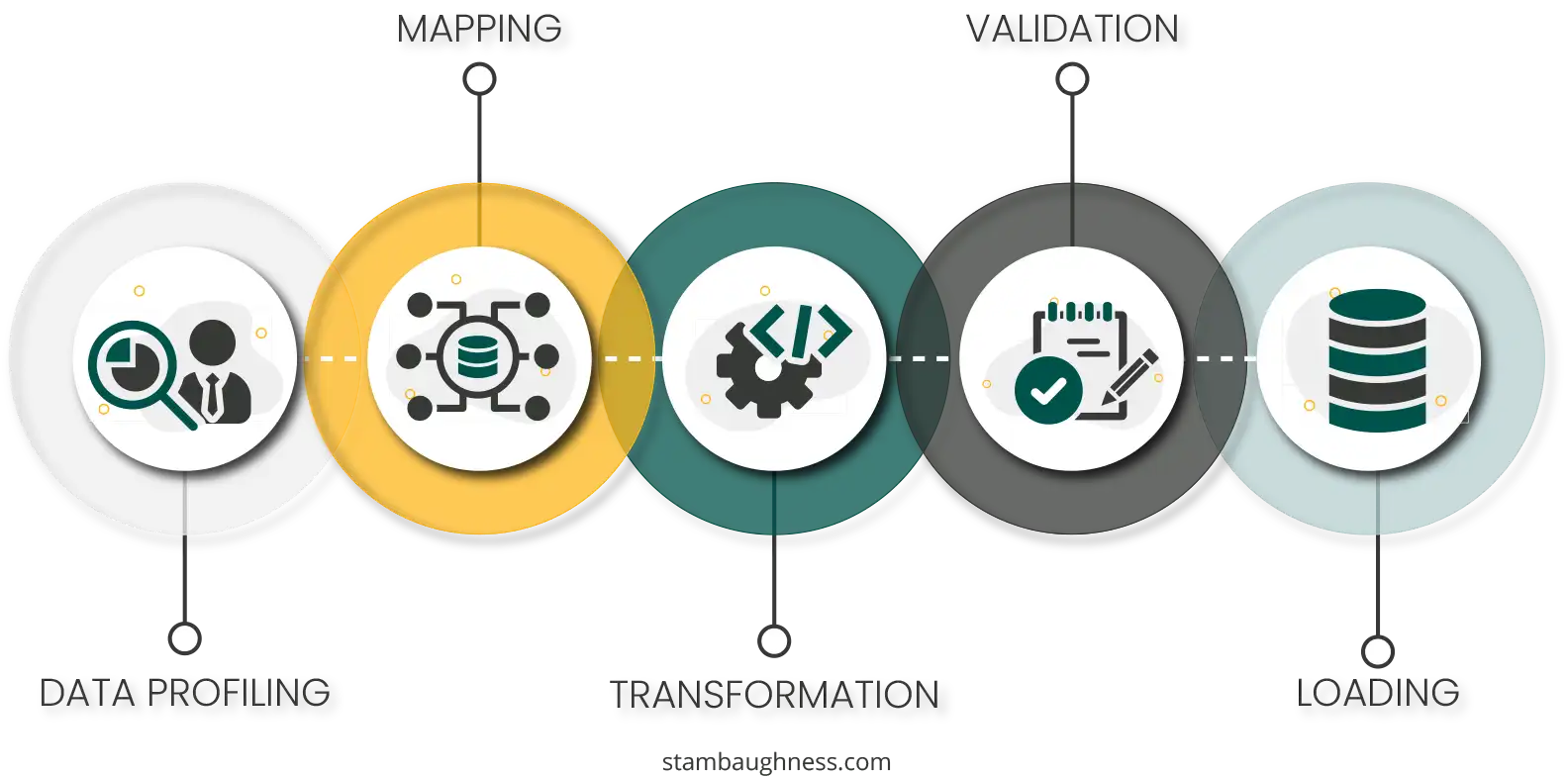
Data conversion is a structured process designed to ensure that data is correctly transformed into the required format for the target system. Key stages typically include:
- Data Profiling: Analyzing the source data’s structure, format, quality, and completeness to identify inconsistencies or issues before conversion begins.
- Mapping: Precisely defining how data elements from the source system correspond to their equivalents in the target system.
- Transformation: The active stage where data is converted into the necessary format or structure required by the target system.
- Validation: Rigorously checking the transformed data for accuracy and integrity against defined rules.
- Loading: Importing the validated and converted data into the target system.
What is Data Migration? Moving Your Data to a New Home
Data migration is the process of transferring data from one system or storage location to another. Its primary goal is to relocate data to a new platform, whether for a system upgrade, a complete overhaul, a merger, or a consolidation of multiple systems. It’s about ensuring your data safely and completely moves from an old environment to a new one, maintaining its integrity throughout the journey.
The Data Migration Process: A Multi-Stage Journey
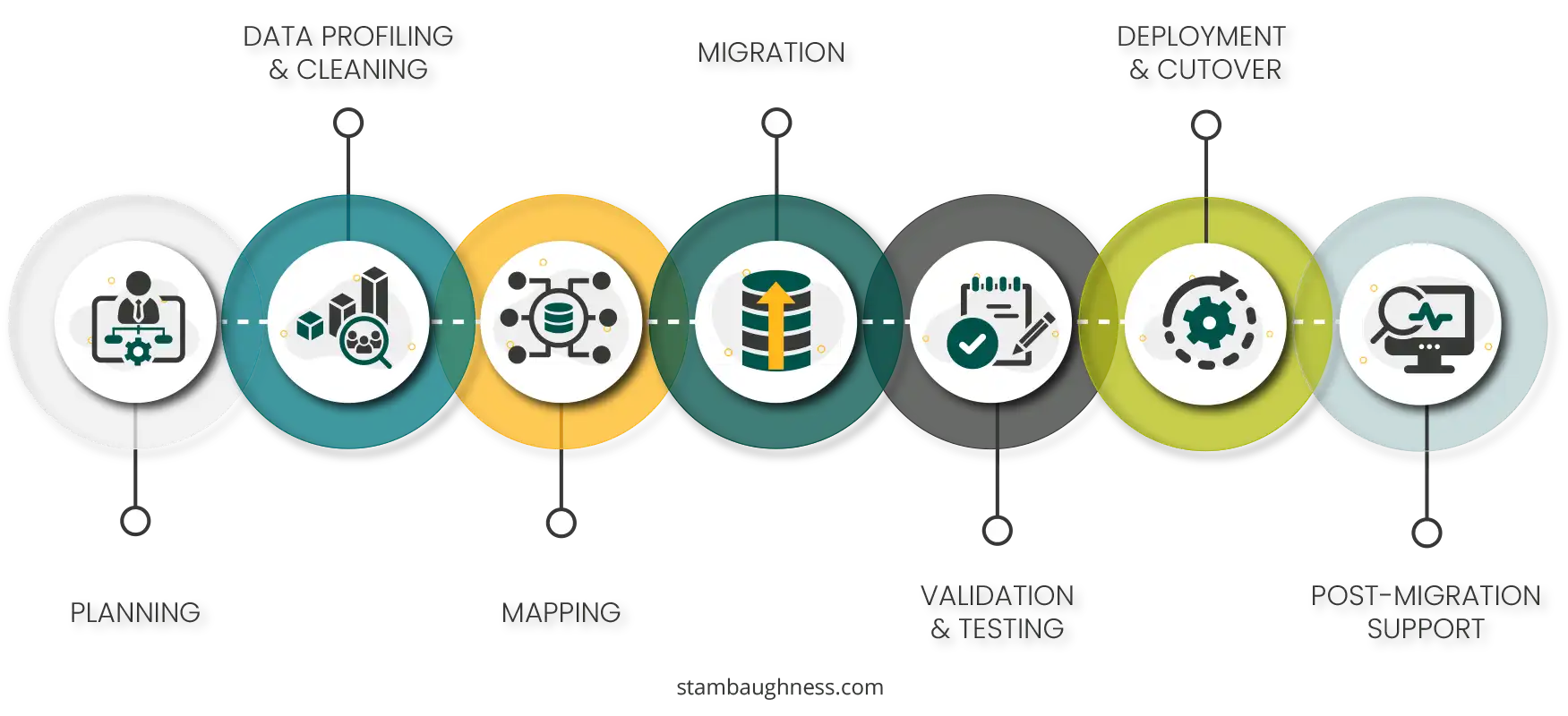
Data migration is a multi-stage, often more complex, process that ensures the successful transfer of data from one system to another. Here’s a breakdown of the key steps:
- Planning: Defining the scope, objectives, timelines, tools, and identifying potential risks for the entire migration project.
- Data Profiling & Cleaning: Analyzing and cleaning source data to ensure its quality and integrity before migration. This often identifies data that needs conversion.
- Mapping: Designing the data architecture for migration. This ensures source data elements map correctly to their new locations in the target systems.
- Migration: This is the core phase where data is transferred from the source to the target system. This may involve multiple iterations.
- Validation & Testing: Rigorous validation of the accuracy, completeness, and functionality of the migrated data within the new system.
- Deployment & Cutover: Activating the new system with the migrated data in the production environment.
- Post-Migration Support: Conducting ongoing audits, monitoring, and maintenance to preserve data integrity and optimize system performance.

Key Distinctions: Conversion vs. Migration
Understanding the fundamental differences is crucial for making informed decisions and choosing the right approach for your firm’s data management needs.
Data Conversion
- Purpose: Primarily to transform data’s format or structure to ensure compatibility within the same system or across different systems.
- Focus: Changes the representation of data (format, type, structure) to meet system requirements.
- Scope & Complexity: Focuses on specific data elements.
Data Migration
- Purpose: Primarily to transfer data’s location from one system or environment to another, enabling upgrades, consolidations, or platform shifts.
- Focus: Relocates the data itself and often involves broader system-level changes.
- Scope & Complexity: Broader in scope and often significantly more complex, involving multiple stages and systems.
Accelerate Your Success with Expert Data Management
A well-executed data conversion or migration isn’t just a technical task; it’s a critical component of your growth strategy. At Stambaugh Ness, we apply an Anticipatory Approach to help project-based firms manage these complex transitions.
Our Data Solutions team is deeply versed in both Data Conversions and Data Migrations. We guide you through the process, identifying the right approach for your specific business objectives and ensuring a seamless, accurate transition from one system to the next.
Ready to confidently manage your firm’s data during system changes? Let’s ensure your data works for you, every step of the way.
Discover what a strategic data transition could do for your firm. Contact us today to get started.
Frequently Asked Questions (FAQ)
Q1: What is the main difference between Data Conversion and Data Migration?
Data Migration is about moving data from one system to another (e.g., when upgrading software or merging companies). Data Conversion is about changing the format or structure of data to make it compatible with a new system’s requirements.
Q2: Why is understanding both processes important for my business?
Knowing the distinction helps you plan more effectively for system changes, avoid costly errors, ensure data integrity, and choose the right resources and tools for a successful, accurate data transition.
Q3: How can Stambaugh Ness assist with my firm’s data conversion or migration needs?
Our Data Solutions team uses an Anticipatory Approach to assess your specific business objectives. We then guide you through the entire process, whether it’s a complex data migration, a targeted data conversion, or both, ensuring a seamless and accurate transition for your critical data.